

Team Events: The ultimate guide to unforgettable team events
Team events have long been more than just a nice addition to everyday business life. Modern companies use team events specifically as a strategic tool for team cohesion, motivation and active corporate culture. At the same time, standards of originality, quality and professional organization are growing — because employees expect more than a standard program with sandwiches.
Whether it's a team building workshop, cooking together, Sommerfest in the open air, Christmas party with a festive menu or a sporting outdoor event: Team events include many formats that must be coordinated and professionally organized. If you do this well, you will win more motivated employees, stronger teams and a positive employer image.
In this comprehensive guide, we show how modern team events work, which formats have proven effective in practice, what costs companies should realistically expect and why professional Event catering is decisive for the success of every team event.
1. What a team event means today
In the past, team events usually consisted of an annual company outing or the obligatory Christmas party — often with little creativity and a limited budget. Those days are gone. Today, employees expect significantly more variety, higher quality and, above all, experiences that create real added value for team cohesion.
Modern team events include a wide range of formats: creative team building workshops with joint activities, culinary events such as cooking classes or BBQ events outdoors, sporting challenges and outdoor adventures, cultural events followed by Business dinner, regular team lunches as a recurring ritual and large company parties with professional Party catering.
Companies are increasingly relying on external partners and specialized service providers, as the internal organization of team events ties up considerable resources and professional implementation delivers better results.
2. Why team events are becoming increasingly important for companies
Good team events have a direct and measurable effect on team dynamics, motivation and productivity. What is experienced together not only strengthens cohesion, but also influences the emotional connection to the company.
Studies show that regular team events sustainably strengthen employee loyalty and significantly reduce the willingness to change. Shared experiences promote communication across departmental boundaries and break down silos. An attractive event program increases employer attractiveness — a factor that is increasingly being addressed on review portals and in job interviews. And last but not least, well-organized team events increase the creativity and innovative capacity of teams.
Team events are playing an increasingly important role, particularly in the competition for skilled workers. Companies that invest here position themselves as modern, respectful employers who offer more than just a good salary.
3. A comparison of the most popular team event formats
There are various approaches to how companies can design team events. Each format has specific strengths and is suitable for different goals.
Culinary team events
cooking together, BBQ events or food tastings are among the most popular team building formats. Preparing and enjoying food together naturally promotes collaboration. finger food workshops, BBQ challenges or international cooking evenings offer variety and suit teams of all sizes. The costs range between 40 and 90 euros per person, including ingredients and professional instructions.
outdoor and sports events
Climbing parks, canoeing, hiking or sports tournaments challenge teams physically and mentally. These formats are particularly suitable for building trust and sharing shared borderline experiences. Food plays a central role in this: A professional buffet catering After an active day, round off the experience and make for a convivial end.
Creative and cultural events
Escape rooms, art workshops, improvisational theatre or joint city tours offer intellectual incentives and promote creative thinking. These formats are great to combine with a subsequent meal together, such as a brunch on the weekend or a Business lunch in a relaxed atmosphere.
4. Catering at the heart of every team event
Culinary supply is a decisive success factor for every team event. Good food creates atmosphere, promotes conversation and is remembered — as does bad catering.
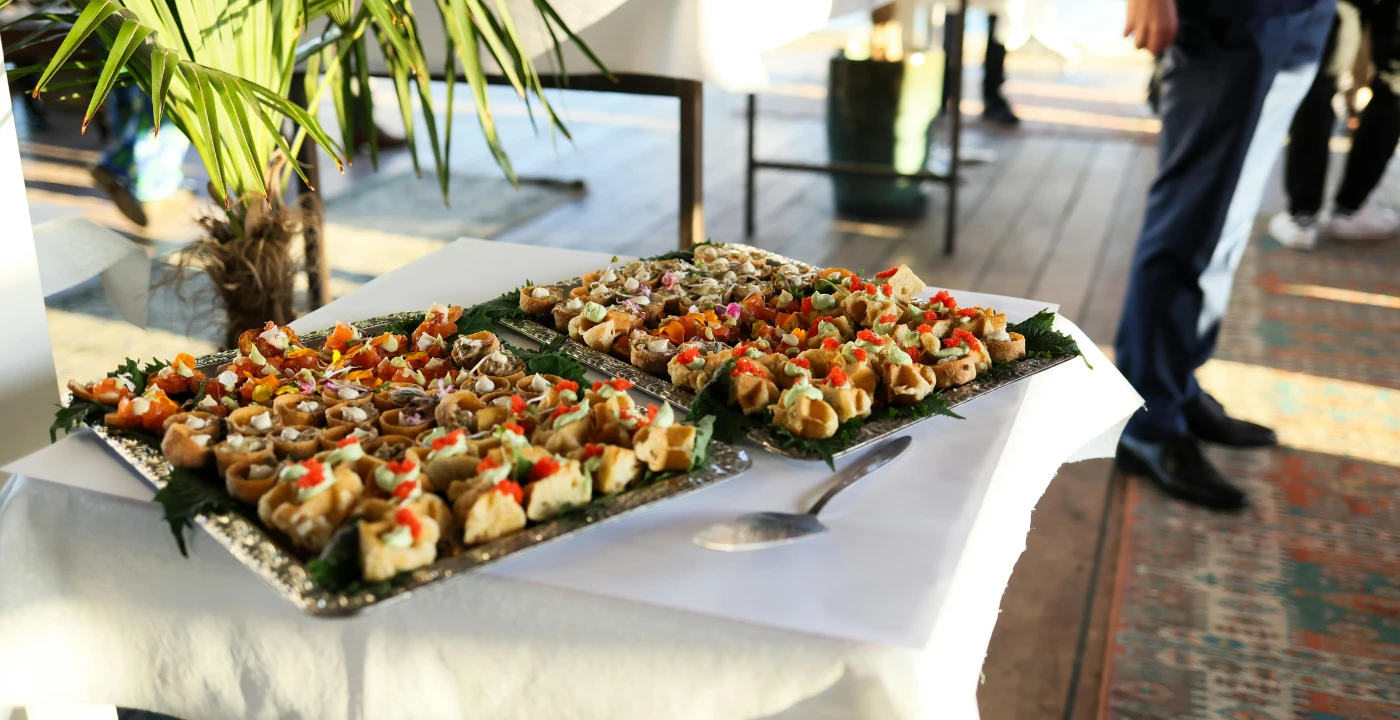
Proven catering concepts for team events include buffet catering with changing themes and international cuisine, finger food for casual networking formats and bar table events, Barbecue catering for outdoor events and summer parties, vegan and vegetarian options as an integral part of every offer as well as professional Beverage catering with cocktail bar or craft beer tasting.
Many companies underestimate the impact of Caterings on the overall impact of a team event. Well-thought-out culinary accompaniment makes a good event an outstanding experience.
Plan successful team events — without organizational stress
- Clear process instead of chaos on the day of the event
- Coordinate catering & location
- Impress customers, partners & employees
5. Plan team events correctly according to company size
The ideal organization of a team event depends largely on the size of the company and team structure. What works for a start-up with 15 people rarely fits a company with 500 employees.
Small teams of up to 20 people benefit in particular from interactive formats such as joint cooking classes, escape rooms or creative workshops. The personal atmosphere enables intensive discussions and deep team connections. Party catering On a small scale, this is often the right choice.
Medium-sized teams of 20 to 80 people need more structure and parallel activities. A combination of team building stations and central buffet catering has proven effective. Themed events such as a summer party with various food stations provide variety.
Large events with 80 people or more require professional event planning and scalable catering solutions. corporate catering With several stations, service personnel and well-thought-out logistics, this is essential. Catering marketplaces offer the advantage of flexibly combining various specialized providers.
6. Seasonal team events: From summer party to Christmas party
Many companies use seasonal events as a natural setting for team events, where appropriate catering plays an even more central role.
In spring, kick-off events are ideal for new quarters or projects, combined with a Brunch catering in the countryside. Summer is the peak season for Summer festivals with BBQ stations in the open air, outdoor sports and beach volleyball. In autumn, thanksgiving events, wine tastings and creative indoor workshops are suitable as team building. The annual financial statements are made up of Christmas party with a festive menu, which is one of the most important team events of the year.
Here, the team event often overlaps with Event catering and corporate catering. The advantage of a marketplace: For every season and occasion, companies can choose the specialized providers that best suit the respective format.
7. What employees expect from team events
Expectations for team events have changed fundamentally in recent years. Today's employees want authentic experiences that promote real team cohesion instead of set up compulsory events with boring program items.
Variety and originality are at the top: Recurring standard formats quickly lose their appeal. Inclusivity plays an equally important role — events should be accessible to all employees, regardless of fitness level, dietary habits or personal preferences. In addition, there is the desire for a good balance between activity and relaxation, high-quality culinary supplies with vegetarian and vegan options and enough free time for casual conversations.
Companies that take these expectations seriously and incorporate them into their event planning benefit from a higher participation rate, a better atmosphere and a lasting team-building effect.
8. Cost structure of modern team events
The costs for team events depend heavily on the chosen format, the number of participants and the quality standards. A realistic assessment helps with budget planning.
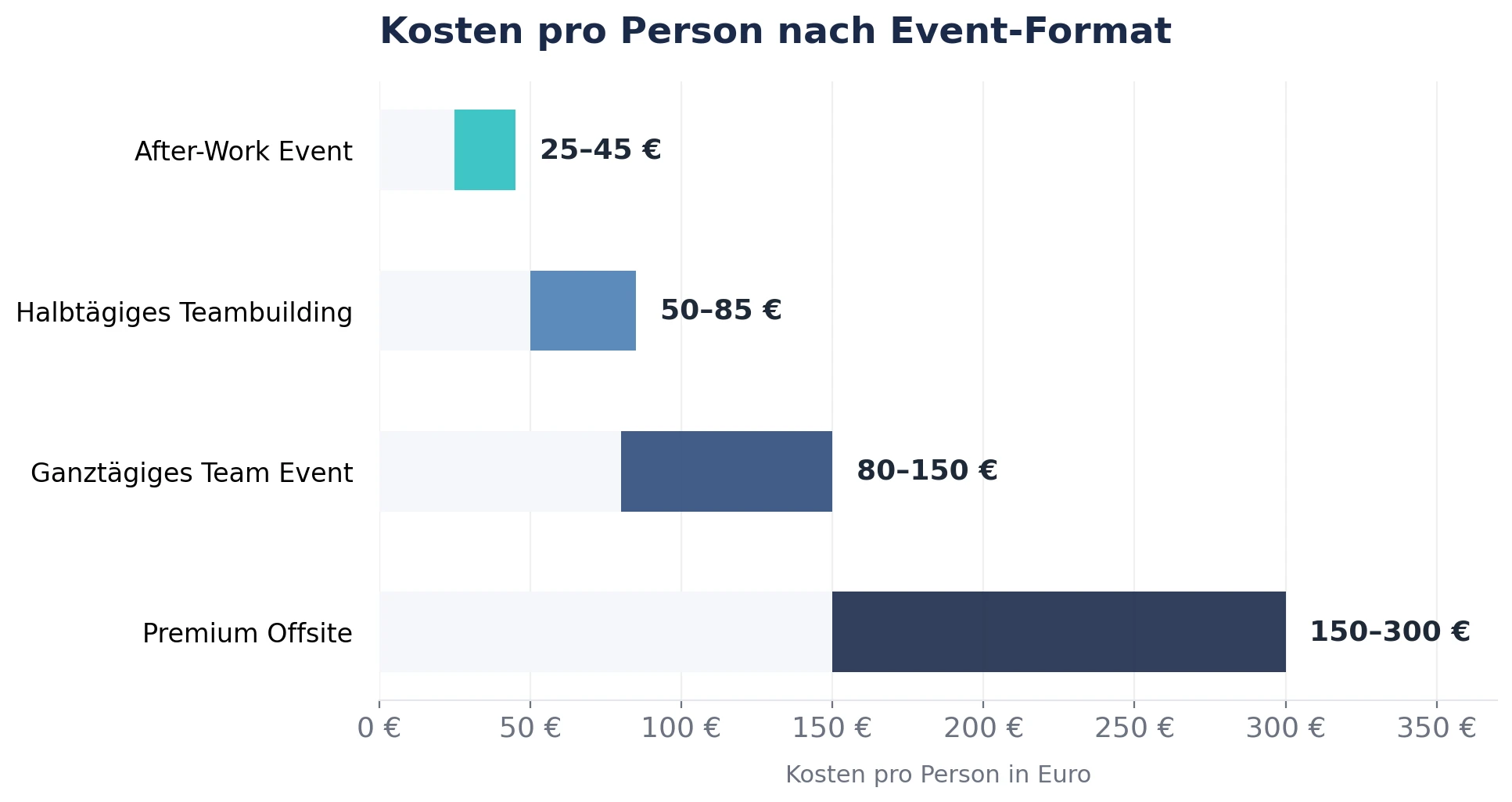
For a simple team lunch or after-work event, companies should expect 25 to 45 euros per person. A half-day team building event with activity and catering costs 50 to 85 euros per participant. A full-day team event with a professional program, location and full-service catering costs between 80 and 150 euros per person. Premium formats such as multi-day offsites or exclusive experiences can reach 150 to 300 euros per capita and more.
Experience has shown that the distribution of costs at a typical team event is as follows: Around 40 to 50 percent of the budget is spent on catering and drinks, 20 to 30 percent on location and technology, 15 to 25 percent on program and activities, and 5 to 10 percent on organization and logistics.
Catering for your team event — get offers
- Overview of suitable caterers
- Minimal minimum order values
- Special menu suggestions for team events
9. Cost example: Team event for 50 employees
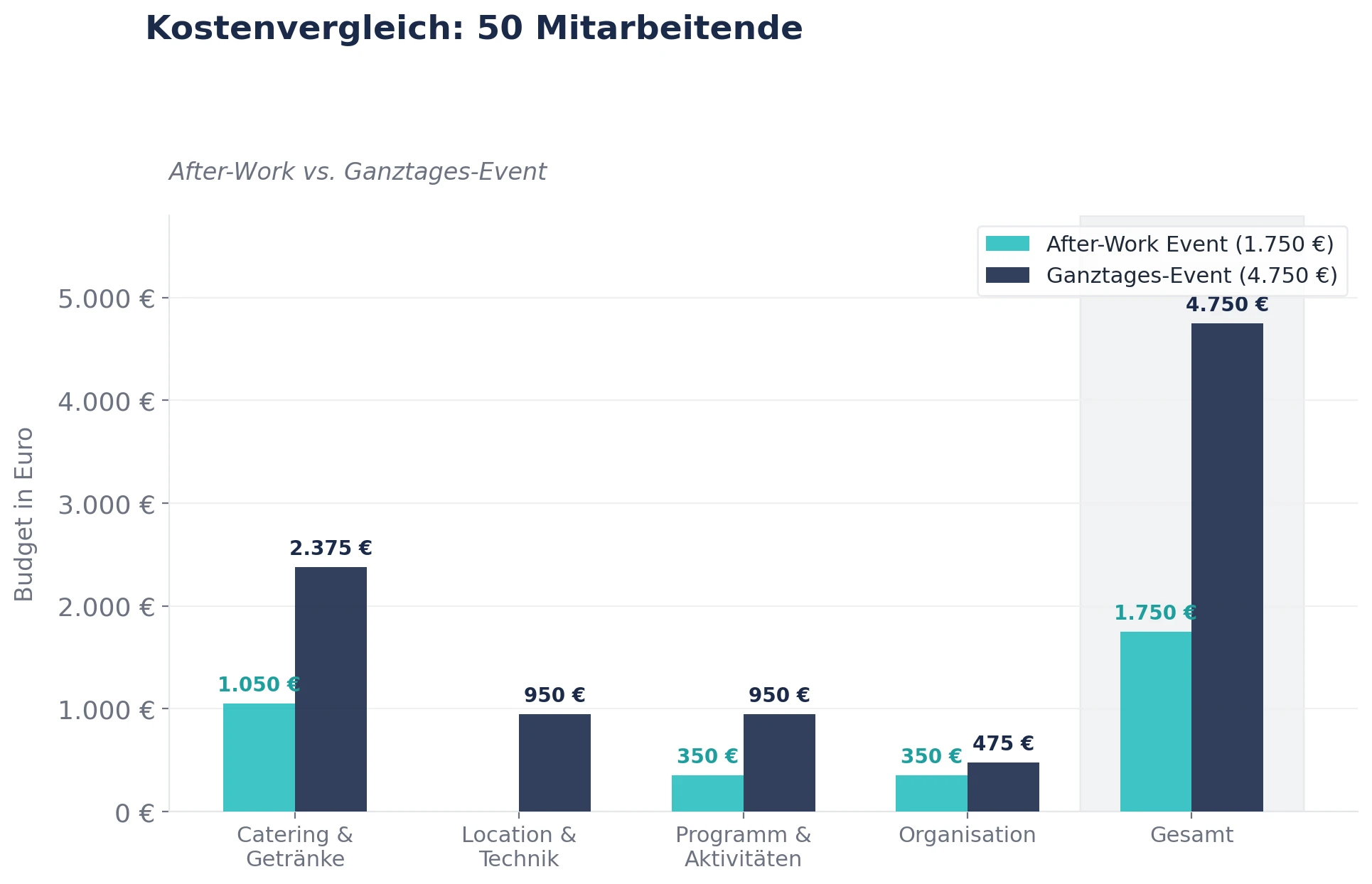
In order to make the costs tangible, two practical examples show what budget companies can expect with 50 employees.
Option 1: After-Work Team Event
A relaxed evening event with finger food buffet, Beverage catering And the quiz round in your own company costs around 35 euros per person. With 50 participants, this results in a total budget of around 1,750 euros — an affordable option for regular events.
Option 2: All-day summer team event
A professionally organized outdoor event with team building stations, Barbecue catering, Beverage flat rate and rented location costs around 95 euros per person. The total budget for 50 people is around 4,750 euros.
The difference of around 3,000 euros shows how strongly the chosen format influences the overall costs. Many companies find a middle ground by combining different formats and budget classes over the course of the year.
10. Common challenges and how companies solve them
Many companies face similar problems when planning team events. The different interests and expectations of employees make it difficult to choose the format. Remote and hybrid teams can't always attend face-to-face events. The organizational effort for location search, catering selection and program design ties up internal resources considerably. And a lack of experience in event planning means that budgets are exceeded or expectations are not met.
Flexible catering solutions via marketplaces address at least the culinary part of these challenges: Different caterers cover different tastes and diets, order quantities can be adapted to the actual number of participants at short notice, and the central platform simplifies organization and billing. For hybrid teams, there are also Foodboxes to, which are sent to remote workers.
11. Practical example: Team event calendar on an annual basis
A medium-sized company with 80 employees shows how a well-thought-out mix of different team events throughout the year works in practice.
In January, the year starts with a New Year's brunch and start of the year, accompanied by a professional Brunch catering with sparkling wine and fresh juices. This is followed by spring team building with outdoor activities followed by buffet catering. The highlight of summer in July is a big Sommerfest with BBQ stations, music and games. In October, an autumn workshop brings together creative teamwork with a dinner event. The festive financial statements in December are made up of Christmas party with multi-course menu. In addition, there are monthly informal team lunches with changing caterers.
This combination enables continuous team development while at the same time distributing costs. The variety prevents event fatigue, and the regular team lunches maintain team spirit even between major events.
12. Digitalization and future trends at team events
Digital solutions make planning and organization of team events much easier. Modern platforms offer centralized event planning with participant management, easy selection and booking of catering via digital marketplaces, automated budget control and billing, and feedback tools for continuous improvement.
In the future, hybrid event formats that involve face-to-face and remote participants equally, personalized catering experiences based on individual preferences and dietary needs, sustainable event concepts with a measurable CO₂ footprint and climate-neutral catering and the integration of gamification elements and interactive technology continue to shape the industry. The trend towards shorter but more frequent team events is also gaining in importance — away from major annual events and towards regular team experiences.
13. Checklist: Plan a team event successfully
Planning (8—12 weeks in advance)
- [] Define the goal and format of the team event
- [] Set a budget and get approval
- [] Coordinate an appointment and determine the number of participants
- [] Research and book a suitable location
Organization (4-6 weeks in advance)
- [] Select catering partners and coordinate the menu
- [] Inquire about participants' dietary preferences and allergies
- [] Plan the program and time schedule in detail
- [] Send internal communication and invitations
Implementation and follow-up
- [] Last coordination with all service providers one week in advance
- [] Define contact person for the event day
- [] Get feedback from participants afterwards
- [] Analyze costs and document learnings for the next event
14. Common questions about team events
How much does a team event cost per person?
Depending on the format, between 25 and 150 euros per person. A simple after-work event with finger food costs 25 to 45 euros, a full-day team event with program and full-service catering costs 80 to 150 euros.
How often should companies host team events?
Experts recommend at least four major team events per year, supplemented by monthly informal formats such as joint team lunches. In this way, team cohesion is maintained permanently.
Which catering format is best for team events?
buffet catering and finger food are best because they offer flexibility and encourage conversations. For outdoor events, Barbecue catering ideal. Through a catering marketplace, companies can find the right provider for every format.
How do you plan team events for hybrid or remote teams?
Hybrid formats combine face-to-face events with digital integration. Remote participants can use Foodboxes be included culinarily, while a joint video call creates the connecting element.
15. Conclusion: Team events as a strategic success factor
Modern team events are much more than just a nice additional offer — they are a strategic part of a successful corporate culture. Well-thought-out events strengthen team cohesion, promote communication and sustainably increase motivation and employee loyalty.
Professional catering plays a central role in this: It creates atmosphere, promotes informal conversations and turns a good event into an outstanding experience. Catering marketplaces offer the most efficient way to find the right provider for every format and team size — from finger food for easy after-work until full-service event catering for the big annual celebration.
Companies that see team events as a strategic investment and implement them professionally benefit from stronger teams, happier employees and an employer image that makes the difference in the competition for talent.
Similar articles




Get an individual menu suggestion today.